
 Контакт
 Как се пазарува?

Доставка
Наръчник за пазаруване
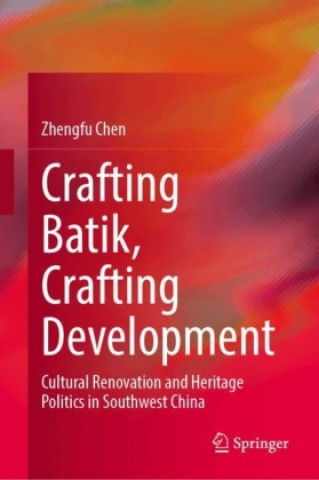
Crafting Batik, Crafting Development
Cultural Renovation and Heritage Politics in Southwest China
 Английски език
 405 b
 Подготвяме
 Нови
 Издание 03. 04. 2027
До 30 дни за връщане на стоки

This book examines how the revival of Miao batik in Danzhai, Guizhou, has become a contested arena of cultural renovation and development. Based on twenty-five months of engaged ethnographic research, it follows the relations among women artisans, material practices, local governments, heritage institutions, nongovernmental organisations, experts, entrepreneurs, tourists, and markets. The analysis shows that batik is simultaneously an embodied skill, a material expression of cosmology and identity, a livelihood resource, a heritage category, and a political-economic instrument. Cultural-development initiatives can generate income, visibility, and renewed cultural confidence, yet they can also simplify local knowledge, intensify competition, distribute recognition unevenly, and accelerate commodification.
To explain these ambivalent effects, the book brings materiality, landscape, mobility, and rooted-network approaches into dialogue with the Chinese concept of jianghu, understood as a relational arena shaped by reputation, tacit rules, obligation, rivalry, and shifting alliances. By placing ethnographic evidence at the centre of its argument, the book contributes to development studies, the anthropology of art and material culture, human geography, heritage studies, and debates on engaged research. It argues that cultural renovation is neither preservation nor commercialisation alone, but an open-ended process through which objects, identities, institutions, and places are continually remade.


Информация за книгата
Английски език

Подарете тази книга днес
Лесно е
1 Добавете книгата в количката си и изберете Доставка като подарък 2 В замяна ще ви изпратим ваучер 3 Книгата ще пристигне на адреса на получателяЗдравейте! Аз съм Libroamiko, вашият книжен съветник.
Как мога да ви помогна?