
 Контакт
 Как се пазарува?

Доставка
Наръчник за пазаруване
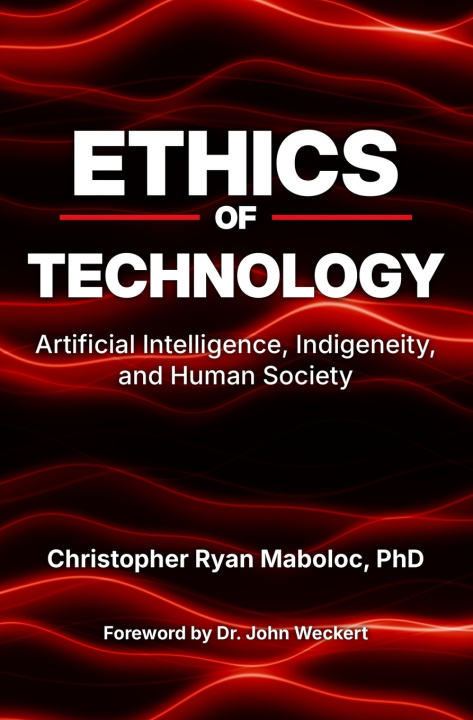
Ethics of Technology
Artificial Intelligence, Indigeneity, and Human Society
 Английски език
 47 b
 Подготвяме
 Нови
До 30 дни за връщане на стоки

About the Book
What if the greatest danger of artificial intelligence is not that machines will learn to think like us, but that we will gradually learn to think like machines?
AI can write our papers, shape what we see online, influence political choices, and perform tasks once reserved for human judgment. Yet behind every promise of speed and convenience lies a question we too rarely ask: Who gains from this progress-and who pays the price?
In Ethics of Technology: Artificial Intelligence, Indigeneity, and Human Society, Filipino philosopher Christopher Ryan Maboloc moves beyond the familiar excitement and fear surrounding AI to examine the kind of society we are building with it. His concern is not simply whether artificial intelligence works. It is whether it serves human dignity, freedom, justice, and a life worth living.
Drawing on the thought of Martin Heidegger, Herbert Marcuse, Andrew Feenberg, and contemporary scholars of computer ethics, Maboloc examines the power behind today's technologies. He explains how algorithms, social media platforms, data extraction, and techno-capitalism shape our desires and decisions-often without our noticing. He also considers the possibilities of technology as a means of education, democratic participation, cultural preservation, and social change.
From machine learning and large language models to agentic AI and the prospect of superintelligence, Maboloc places new developments within their wider social context. He weighs innovation's promise against the risks of digital manipulation, the displacement of workers, and the growing demands that AI infrastructure places on water, energy, and the environment.
What sets this book apart is where it directs our attention: to Indigenous communities whose voices are too often absent from global discussions about AI.
Through research with the Ibaloy of Benguet and the Bagobo Tagabawa of Davao, Maboloc asks what technological progress looks like from the margins. What happens when languages, traditions, and ancestral knowledge encounter the digital world? Can AI help communities preserve what matters to them, or will it turn their heritage into another commodity? And what can Indigenous ways of understanding nature and human relationships teach a world obsessed with efficiency?
Across eight chapters, the book invites readers to:
Understand the philosophical foundations of modern technology, AI, and techno-capitalism.
Examine AI's effects on privacy, democracy, work, education, and human learning.
Explore the ethical stakes of data ownership, cultural identity, environmental harm, and technological inequality.
Consider how Indigenous knowledge and democratic participation might help make technology more humane.
Confront the deepest question of all: Does greater technological power actually lead to a better life?
With a foreword by Australian philosopher John Weckert and a Publisher's Foreword that brings an Islamic ethical perspective into the conversation, this book speaks to students and scholars of philosophy, social science, and technology, as well as educators, policymakers, developers, and readers concerned about the human consequences of AI.
This is neither a celebration of every new invention nor an argument for turning away from technology. It is an invitation to question the interests, assumptions, and values built into the systems we increasingly depend on-and to imagine ways of using those systems without surrendering what makes us human.
Machines may keep getting smarter. The question is whether we will become wiser.
Read Ethics of Technology-and bring your own judgment to a future too important to leave to algorithms and those who own them.


Информация за книгата
Английски език

Подарете тази книга днес
Лесно е
1 Добавете книгата в количката си и изберете Доставка като подарък 2 В замяна ще ви изпратим ваучер 3 Книгата ще пристигне на адреса на получателяЗдравейте! Аз съм Libroamiko, вашият книжен съветник.
Как мога да ви помогна?