
 Контакт
 Как се пазарува?
Доставка
Наръчник за пазаруване
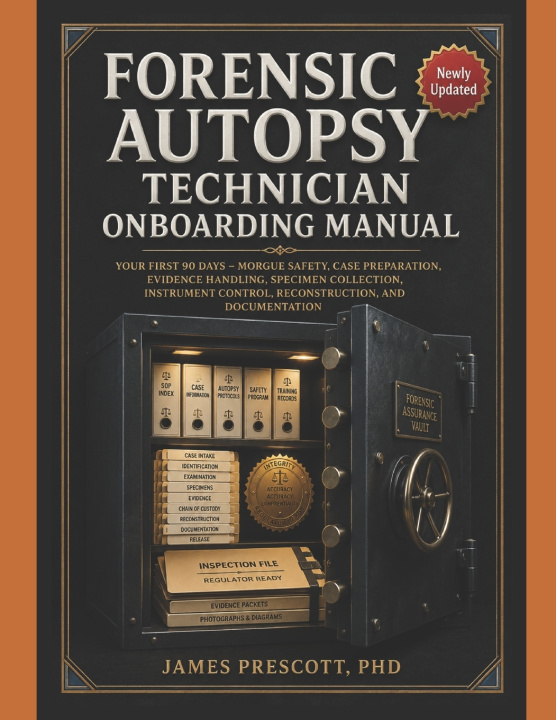
Forensic Autopsy Technician Onboarding Manual
Your First 90 Days: Morgue Safety, Case Preparation, Evidence Handling, Specimen Collection, Instrument Control, Reconstruction, and Documentation
 Английски език
 439 b
439 b
 Нови
Нови
До 30 дни за връщане на стоки

Your First Shift Should Not Feel Like GuessworkA forensic autopsy technician manual should do more than define terms. It should show you what correct work looks like when the room is active, the case file is open, and every label, count, and signature matters. This autopsy technician training guide turns the first 90 days into a clear path from observation to supervised practice to independent-ready performance.Small Errors Can Travel Through an Entire CaseNew technicians often face three worries at once: little morgue experience, unfamiliar forms, and the fear that one rushed step could damage a case. This manual meets those worries directly. It explains where your role begins and ends, when to stop and call a supervising pathologist, and how safety, dignity, and documentation fit together on every shift.Learn the Workflow Through One Connected CaseInstead of scattering isolated examples across unrelated chapters, the book follows a fictional composite case from intake through final audit. You see how identification, photography, specimens, evidence, instrument counts, reconstruction, release, decontamination, and the case log become one traceable record. Each working form appears where you need it, then returns as a fully completed model.What You Can Put to Work Right Away- A staged 30-60-90-day competency roadmap with clear signoff points- PPE, sharps, exposure-response, and room-readiness procedures- Intake, identification, photography, specimen, and evidence workflows- Instrument counts, equipment checks, reconstruction, and release steps- Real-time documentation, decontamination, incident reporting, and final audit- Completed checklists, logs, transfer forms, and supervisor signoff examplesBuilt for the Technician's Actual BoundaryThe manual stays focused on support work: prepare, position, hand, record, photograph, label, transfer, clean, and document. It does not ask you to diagnose or decide cause or manner of death. Repeated expert triggers show when a question belongs to the pathologist, Lead Technician, safety officer, death investigator, or records unit.Your Facility's Rules Still ControlWorried that your office uses different forms or procedures? The book says plainly that its templates are teaching models, not replacements for employer policy. It shows the fields, sequence, and accountability behind strong documentation while directing you back to your facility's SOPs, chain of command, and legal requirements whenever they differ.Support for the Work No Checklist Can Make EasyTechnical readiness is one part of the first 90 days. The manual also addresses vicarious trauma, peer debriefing, Employee Assistance Programs, professional counseling, self-monitoring, and practical decompression habits. That guidance helps you treat your wellbeing with the same steady attention you bring to safety and case integrity.Start With a System You Can Trust on ShiftRead the manual once in sequence, then keep it close as a working reference. Use the condensed tools during training, compare your work with the completed examples, and bring facility-specific questions to the people authorized to answer them. Build safer habits, cleaner records, and a calmer first 90 days-one verified step at a time.


Информация за книгата
Английски език
