
 Контакт
 Как се пазарува?
Доставка
Наръчник за пазаруване
Gender Studies
Concepts, Theories, Feminism, Development, Governance, and Gender-Based Violence
 Английски език
 38 b
38 b
 Нови
Нови
До 30 дни за връщане на стоки

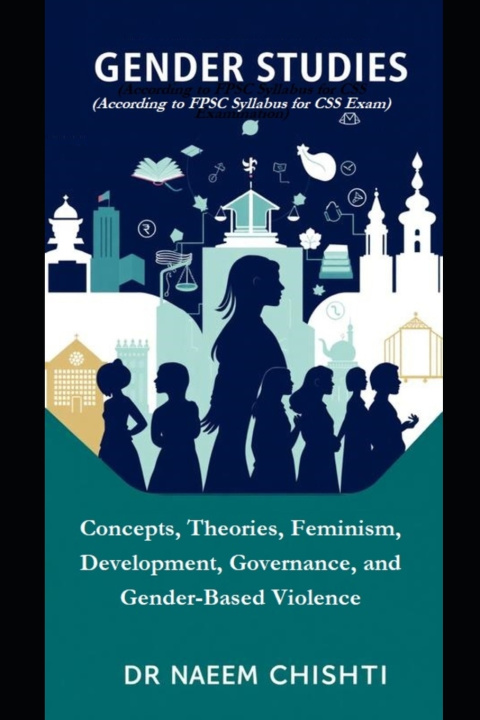
Gender Studies: Concepts, Theories, Feminism, Development, Governance, and Gender-Based Violence.
This book is a comprehensive academic resource designed to meet the requirements of competitive examinations while offering an in-depth exploration of gender as a social and analytical category. The book systematically covers the entire FPSC syllabus, making it an essential guide for CSS aspirants, students of social sciences, and anyone interested in understanding gender dynamics in contemporary society.
The book begins with an introduction to Gender Studies, explaining its emergence as a discipline and clarifying its distinction from Women Studies. It highlights the interdisciplinary nature of gender analysis, drawing from sociology, political science, psychology, economics, and cultural studies. It also engages with the autonomy versus integration debate, offering readers a nuanced understanding of the discipline's academic positioning, particularly in the context of Pakistan.
A major strength of the book lies in its exploration of the social construction of gender. It critically examines how gender identities are produced and maintained through cultural norms, language, institutions, and power relations. By addressing concepts such as masculinity, femininity, and the critique of biological determinism, the book challenges conventional assumptions about sex and gender. It also introduces contemporary theoretical debates, including those related to queer perspectives and evolving understandings of identity.
The section on feminist theories provides a structured overview of major schools of thought, including liberal, radical, Marxist, socialist, psychoanalytic, and postmodern feminism. This theoretical foundation enables readers to understand the diversity within feminist scholarship and the different ways in which gender inequality is analyzed and addressed. The book also traces the historical development of feminist movements, particularly in Western contexts, while situating Pakistan within global feminist discourse.
In its discussion of gender and development, the book critically evaluates major development theories and their gender implications. It explores frameworks such as Women in Development, Women and Development, and Gender and Development, along with critiques of structural adjustment policies and globalization. This section helps readers understand how economic systems and policy decisions shape gender relations at both global and local levels.
The book further examines the status of women in Pakistan, focusing on key areas such as health, education, employment, and legal rights. It provides an evidence-based understanding of structural inequalities and institutional barriers faced by women. In addition, the chapters on governance and political participation analyze women's roles as voters, candidates, and representatives, highlighting the impact of electoral systems and quota policies.
A dedicated chapter on gender-based violence explores its definitions, theoretical explanations, structural dimensions, and policy responses. This is complemented by detailed case studies of Mukhtaran Mai, Malala Yousafzai, and Sharmeen Obaid-Chinoy, which illustrate real-world struggles and achievements in the context of gender justice and activism.
Overall, this book serves as both an academic guide and a critical resource for understanding gender in theory and practice. It is structured to enhance conceptual clarity, analytical ability, and examination readiness, while also fostering a deeper awareness of gender issues in contemporary society.


Информация за книгата
Английски език

Подарете тази книга днес
Лесно е
1 Добавете книгата в количката си и изберете Доставка като подарък 2 В замяна ще ви изпратим ваучер 3 Книгата ще пристигне на адреса на получателяЗдравейте! Аз съм Libroamiko, вашият книжен съветник.
Как мога да ви помогна?