
 Контакт
 Как се пазарува?
Доставка
Наръчник за пазаруване
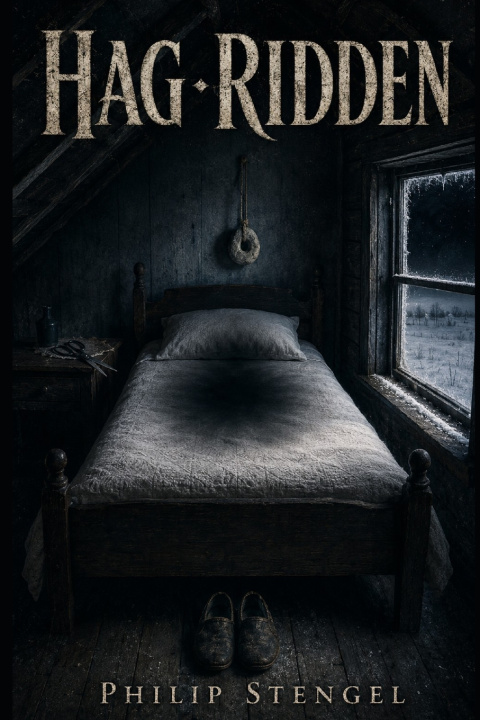
HAG-RIDDEN
 Английски език
 35 b
35 b
 Нови
Нови
До 30 дни за връщане на стоки

Some doors are meant to stay shut. She was born on the wrong side of one.
Marit Halvorsen came home to bury the last of her family.
She is a hospice nurse with nothing left in the tank, and Aurdal, North Dakota is a settlement the century forgot: a scatter of failing farms and boarded storefronts where the snow comes early and the dark comes earlier. Her grandmother Gunhild died alone at ninety-one, found in her bed at peace, with no mark on her. An old woman's heart, the doctor wrote. Marit means to sign the papers, empty the house, and drive back to her life.
Then a neighbor dies the same way. Chest pressed in. Face calm. No mark.
The old people of Aurdal have hung holed stones over their doors for a hundred years. They lay salt along their windowsills and set open scissors by the bed, and they have never once said why. Marit is about to learn why. The thing they have been warding against followed her blood across an ocean and down four generations, and it does not travel from house to house on its own. It rides out from a sleeper to the nearest bed. And every night she closes her eyes, she is the door it comes through.
She has spent eleven years at the bedsides of the dying, holding hands, smoothing sheets, telling frightened strangers it is all right to let go. She knows death from the near side better than anyone alive. She never once imagined she would come to know it from the inside, or that the caved-in chests and the peaceful faces were her doing, carried into the county in her sleep like a sickness with no fever and no name.
They have an old word for it, carried west in the hold of an emigrant ship in 1884 and never spoken aloud since. A mara. A night-rider. The weight that settles on the chest in the black hours and presses the breath out slow, blamed by the old country when the dead were found cooling in their beds with no wound on them. It is not a story. It runs in her blood, one carrier to a generation, always a woman, always alone with it, and Marit is the last of the line. When the last carrier dies, the thing dies with her. That is the mercy in it. It is also the trap.
Her family kept a ledger: a hundred years of the dead, written in the failing hands of the women who carried what she carries now. The wards will buy a night. They will not buy a winter. There is one way to end it, set down plain beside its cost, and the cost is everything, and it cannot be done alone. The blizzard has already closed the roads. It has left her with one hurt farmer, a town filling with grief and torches, and a starving thing in the dark that reaches farther every night it is turned away.
Lars Aaberg is a widowed farmer with a bad chest and no illusions, the one man in the county who has seen the thing with his own eyes and lived. He will stand with her at the edge of a frozen river and do the hardest thing a person can be asked to do. But knowing the way out and having the nerve to take it are two different winters.
And the town is turning. A grieving son wants someone to blame and a name to bury his mother under, and he has found one. The roads are shut. The phones are down. The men of Aurdal are remembering what their grandfathers did the last time the dying came, and they have given her two nights to decide whether she has the courage her grandmother wrote down in that ledger and could not bring herself to ask.
Because a hundred years ago, the men of Aurdal believed they knew how to end it too.
They were wrong. It is still killing.
HAG-RIDDEN is a folk-horror novel of the far northern prairie: a slow, patient dread out of the Norse old country, and the story of a woman who came home to bury her family and learned that the last name left to bury might have to be her own.
Turn the lock. Salt the sill. It will not be enough.


Информация за книгата
Английски език

Подарете тази книга днес
Лесно е
1 Добавете книгата в количката си и изберете Доставка като подарък 2 В замяна ще ви изпратим ваучер 3 Книгата ще пристигне на адреса на получателяЗдравейте! Аз съм Libroamiko, вашият книжен съветник.
Как мога да ви помогна?