
 Контакт
 Как се пазарува?
Доставка
Наръчник за пазаруване
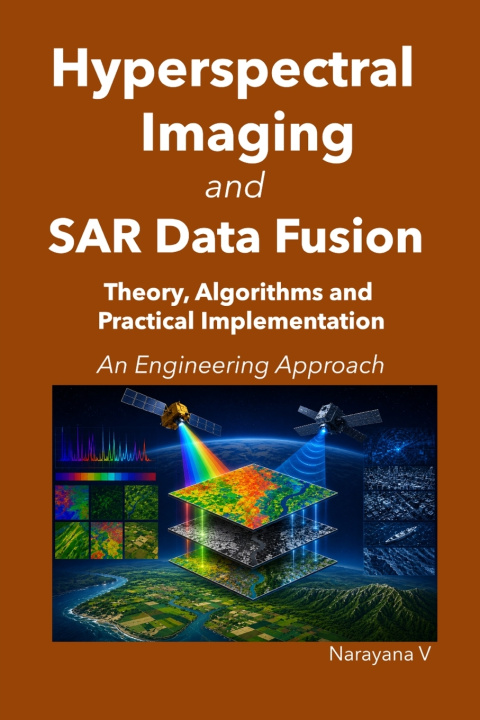
Hyperspectral Imaging and SAR Data Fusion
Theory, Algorithms and Practical Implementation - An Engineering Approach
 Английски език
 88 b
88 b
 Нови
Нови
До 30 дни за връщане на стоки

In an era marked by rapid advancements in remote sensing technologies, the fusion of hyperspectral and Synthetic Aperture Radar (SAR) data has emerged as a transformative approach in the field of aerospace engineering. This textbook, "Hyperspectral Imaging and SAR Data Fusion: Theory, Algorithms and Practical Implementation - An Engineering Approach," is designed to serve as a comprehensive resource for both students and professionals seeking to deepen their understanding of the theoretical foundations, algorithmic developments, and practical applications associated with these cutting-edge methodologies. By integrating data from diverse sensing modalities, we can enhance the quality and utility of information extracted from the Earth's surface, thereby enabling more informed decision-making in various sectors, including environmental monitoring, urban planning, and defense.
The unique characteristics of hyperspectral imaging, with its rich spectral information, complement the high-resolution spatial capabilities of SAR systems. The combination of these two modalities enables the extraction of nuanced features and patterns that would otherwise remain obscured when using a single data source. This text delves into the underlying principles governing data fusion, providing a robust theoretical framework that encompasses key concepts such as spectral unmixing, feature extraction, and classification algorithms. Each chapter systematically builds upon the previous one, ensuring that readers acquire a solid grasp of both the mathematical foundations and practical implications of hyperspectral and SAR data fusion.
Furthermore, this book emphasizes the importance of algorithmic innovation in addressing the challenges posed by the inherent complexities of remote sensing data. We explore a range of advanced techniques, including machine learning and statistical methods, that facilitate the effective integration of hyperspectral and SAR data. The algorithms presented are not only grounded in rigorous mathematical theory but are also validated through practical case studies, demonstrating their effectiveness in real-world applications. This dual focus on theory and practice equips readers with the tools necessary to implement these techniques in their own research and professional endeavors.
In addition to theoretical and algorithmic insights, this textbook addresses the critical aspect of practical implementation. Readers will find discussions on the selection of appropriate sensors, data preprocessing techniques, and performance evaluation metrics that are essential for successful data fusion projects. The integration of real-world examples and case studies throughout the text serves to bridge the gap between theory and practice, illustrating the multifaceted challenges and solutions encountered in the field of hyperspectral and SAR data fusion.
Ultimately, "Hyperspectral Imaging and SAR Data Fusion" aspires to be not only an academic resource but also a practical guide for engineers and researchers who are at the forefront of remote sensing technology. By fostering a deeper understanding of the principles and methodologies involved in data fusion, we hope to inspire further innovations that will enhance our capabilities in monitoring and interpreting the Earth's complex systems. As we embark on this exploration of hyperspectral and SAR data fusion, we invite you to engage with the material, challenge your understanding, and contribute to the ongoing evolution of this dynamic field.


Информация за книгата
Английски език

Подарете тази книга днес
Лесно е
1 Добавете книгата в количката си и изберете Доставка като подарък 2 В замяна ще ви изпратим ваучер 3 Книгата ще пристигне на адреса на получателяЗдравейте! Аз съм Libroamiko, вашият книжен съветник.
Как мога да ви помогна?