
 Контакт
 Как се пазарува?
Доставка
Наръчник за пазаруване
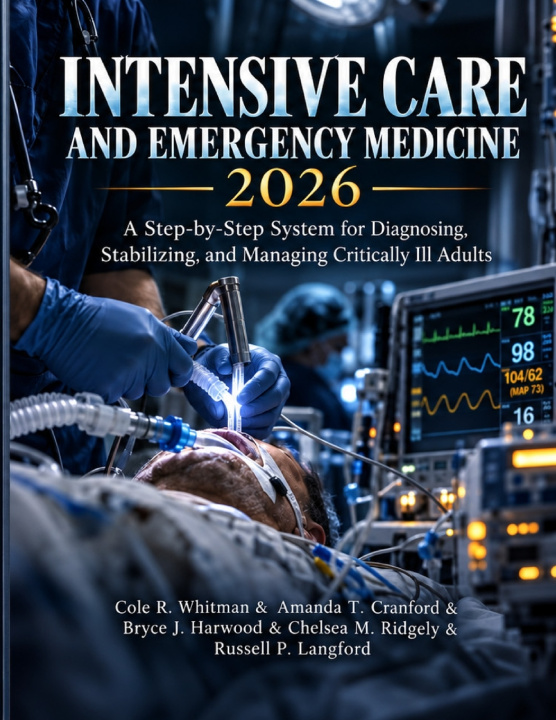
Intensive Care And Emergency Medicine 2026
A Step-by-Step System for Diagnosing, Stabilizing, and Managing Critically Ill Adults
 Английски език
 548 b
548 b
 Нови
Нови
До 30 дни за връщане на стоки

Emergency medicine asks what must happen now. Intensive care asks what must happen next. The sickest adults often demand both answers in the same hour.
INTENSIVE CARE AND EMERGENCY MEDICINE 2026 is built around the clinical bridge between initial stabilization and ongoing critical care. It gives readers a step-by-step system for moving from an unstable presentation to a working diagnosis, immediate physiologic support, targeted treatment, and repeated reassessment as the patient's condition evolves.
The approach begins with priorities rather than labels. Airway, breathing, circulation, perfusion, mental status, and other signs of instability must be recognized before a complete diagnosis is available. From there, the task is to decide which possibilities are dangerous enough to act on immediately, which investigations can narrow the problem, and which interventions should begin while diagnostic uncertainty remains.
That sequence becomes especially important when several problems compete at once. Hypoxemia may coexist with shock. Altered mental status may reflect infection, metabolic disturbance, medication effects, or impaired perfusion. A treatment that improves one physiologic target may create a new problem elsewhere. The book helps readers organize these situations so that stabilization, diagnosis, monitoring, and escalation remain connected rather than becoming separate checklists.
Key areas include early resuscitation, shock states, respiratory compromise, hemodynamic assessment, urgent diagnostics, organ support, treatment monitoring, clinical deterioration, and coordinated team decisions. The emphasis is on understanding what each finding means for the next action-and recognizing when the response to treatment should change the working diagnosis or management plan.
Designed for physicians, residents, medical students in acute-care rotations, advanced practice clinicians, and other professionals involved in emergency and critical care, this resource supports both structured learning and rapid review. It is particularly useful when a patient is moving from first contact to higher-acuity care and the clinical team must keep priorities clear while new information continues to arrive.
Emergency and intensive care meet at the same question: what is the safest next move for this patient, right now?
Use INTENSIVE CARE AND EMERGENCY MEDICINE 2026 to build a disciplined sequence from recognition to stabilization, from stabilization to diagnosis, and from diagnosis to a management plan that can adapt as quickly as the patient does.


Информация за книгата
Английски език

Подарете тази книга днес
Лесно е
1 Добавете книгата в количката си и изберете Доставка като подарък 2 В замяна ще ви изпратим ваучер 3 Книгата ще пристигне на адреса на получателяЗдравейте! Аз съм Libroamiko, вашият книжен съветник.
Как мога да ви помогна?