
 Контакт
 Как се пазарува?

Доставка
Наръчник за пазаруване
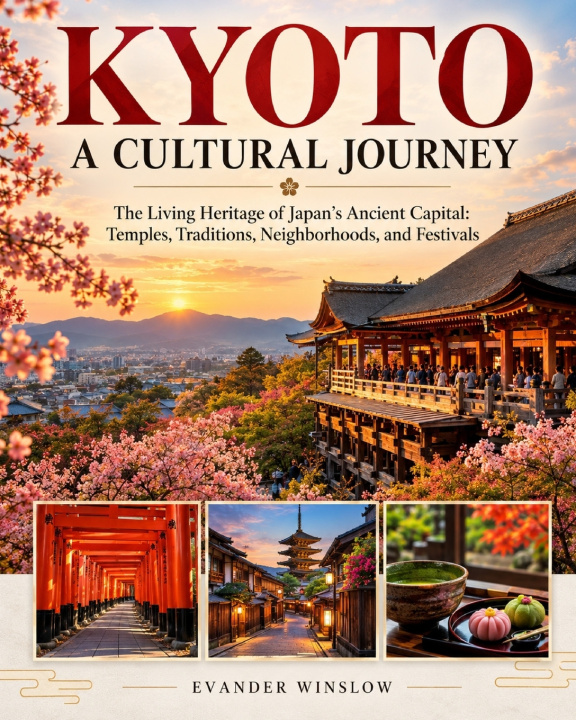
KYOTO
A CULTURAL JOURNEY: THE LIVING HERITAGE OF JAPAN'S ANCIENT CAPITAL: TEMPLES, TRADITIONS, NEIGHBORHOODS, AND FESTIVALS
 Английски език
 76 b
 Подготвяме
 Нови
До 30 дни за връщане на стоки

Kyoto is a city where centuries of history remain part of everyday life. Ancient temples stand within living neighborhoods, traditional crafts continue in modern workshops, seasonal festivals fill familiar streets, and mountains, rivers, gardens, markets, and food traditions all contribute to the character of Japan's ancient capital.
Kyoto: A Cultural Journey explores the city through the places, traditions, and landscapes that give it its distinctive identity.
Travel through Gion and Higashiyama, from Kiyomizu-dera and Yasaka Shrine to the Philosopher's Path and Ginkaku-ji. Explore Arashiyama and Western Kyoto, where bamboo, temple gardens, river scenery, and the cultural landscapes of Tenryu-ji, Kinkaku-ji, and Ryoan-ji reveal another side of the city.
In Central Kyoto, discover the legacy of the Imperial Palace and Nijo-jo Castle alongside Nishiki Market, Pontocho, the Kamogawa River, and the contemporary streets of downtown Kyoto. Farther south, the sacred paths of Fushimi Inari lead into the landscape of Mount Inari, while historic Fushimi reveals a different story shaped by canals, water, and sake brewing. To the north, Ohara, Kurama, Kibune, and the surrounding mountain landscapes offer a quieter perspective on Kyoto beyond its busiest districts.
The journey also extends beyond landmarks. Explore the traditions that continue to shape Kyoto, including tea ceremony, ikebana, textiles, kimono-related crafts, ceramics, traditional performing arts, and seasonal festivals. Discover how kaiseki, shojin-ryori, obanzai, tofu, yuba, wagashi, matcha, and sake reflect the city's connections with seasonality, religion, craftsmanship, and everyday life.
The book also considers Kyoto throughout the year, from spring blossoms and summer traditions to autumn foliage and winter landscapes, while showing how gardens, walking, cycling, and slower exploration can reveal details easily missed on a hurried visit.
For travelers preparing their journey, the final chapter brings these experiences together with practical guidance on getting to Kyoto, using trains, subways, buses, and walking routes, choosing between different areas and styles of accommodation, grouping sights geographically, and traveling respectfully through religious sites, markets, historic neighborhoods, and residential communities.
Rather than treating Kyoto as a checklist of famous attractions, Kyoto: A Cultural Journey encourages a more connected way of experiencing the city-one that brings together heritage, neighborhoods, food, craftsmanship, landscapes, traditions, and contemporary life.
For travelers who want to understand not only what to see in Kyoto, but how its different places and traditions fit together, this book offers a thoughtful starting point for exploring the city at a more meaningful pace.


Информация за книгата
Английски език
Категории

Подарете тази книга днес
Лесно е
1 Добавете книгата в количката си и изберете Доставка като подарък 2 В замяна ще ви изпратим ваучер 3 Книгата ще пристигне на адреса на получателяЗдравейте! Аз съм Libroamiko, вашият книжен съветник.
Как мога да ви помогна?