
 Контакт
 Как се пазарува?
Доставка
Наръчник за пазаруване
 Английски език
 84 b
84 b
 Подготвяме
 Нови
Нови
До 30 дни за връщане на стоки

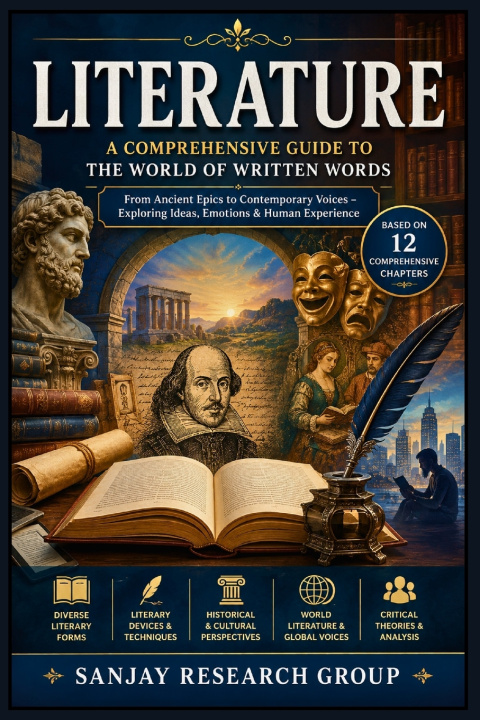
Literature: Concepts, Forms, and Literary Traditions provides a systematic and engaging exploration of literature as a field of study, artistic expression, and cultural heritage. The book is designed to help readers understand the foundations of literature, its various forms, historical development, critical approaches, and its continuing influence on society and human thought.
The journey begins with an introduction to literature, where readers learn about its meaning, scope, functions, forms, and significance. This foundation helps establish a clear understanding of how literature reflects human experiences, values, emotions, and imagination.
Subsequent chapters focus on the three major literary genres-Poetry, Prose, and Drama. Readers explore the characteristics, structures, techniques, and analytical methods associated with each genre. These chapters provide practical insights into understanding literary texts and appreciating their artistic qualities.
The book then examines Literary Devices, introducing readers to important figures of speech and stylistic techniques such as simile, metaphor, symbolism, irony, personification, allegory, and hyperbole. These concepts help readers recognize how writers create meaning, emotion, and aesthetic impact.
A dedicated chapter on Literary Criticism explores major critical theories and interpretative approaches, including Formalism, Structuralism, Post-Structuralism, Reader-Response Theory, and Feminist Criticism. This section encourages readers to engage with literature from multiple perspectives and develop analytical skills.
The historical development of literature is presented through chapters on Classical Literature, Medieval Literature, Renaissance Literature, Modern Literature, and Contemporary Literature. These chapters highlight major literary movements, influential writers, significant themes, and cultural transformations that shaped literary history.
The final chapter on World Literature broadens the reader's perspective by exploring global literary traditions, comparative studies, translation, cultural exchange, and universal human themes. This section demonstrates how literature connects people across different languages, cultures, and historical periods.
What Readers Will Learn
- Fundamental concepts and principles of literature
- Major literary genres and their characteristics
- Literary devices and techniques used by writers
- Methods of literary analysis and interpretation
- Important literary theories and critical approaches
- Historical evolution of literary traditions
- Major literary movements and cultural influences
- Comparative and global perspectives on literature
- Critical thinking and literary appreciation skills
- Practical applications of literary knowledge
By combining theory, historical context, literary analysis, and practical applications, this book offers a complete overview of literary studies and serves as a valuable learning resource for academic, professional, and personal enrichment.
Sanjay Research Group


Информация за книгата
Английски език
Категории

Подарете тази книга днес
Лесно е
1 Добавете книгата в количката си и изберете Доставка като подарък 2 В замяна ще ви изпратим ваучер 3 Книгата ще пристигне на адреса на получателяЗдравейте! Аз съм Libroamiko, вашият книжен съветник.
Как мога да ви помогна?