
 Контакт
 Как се пазарува?
Доставка
Наръчник за пазаруване
 Английски език
 131 b
131 b
 Подготвяме
 Нови
Нови
 Издание 21. 08. 2026
До 30 дни за връщане на стоки

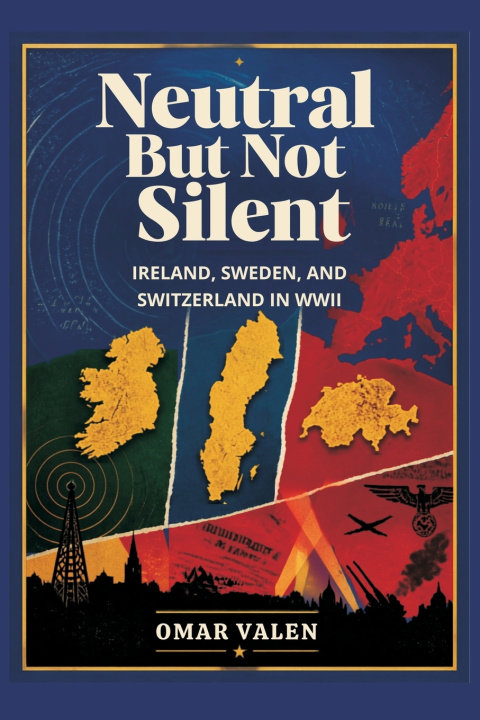
In the middle of the Second World War, three small democracies tried to stand aside from the greatest conflict in history. Ireland, Sweden, and Switzerland declared themselves neutral, yet their ports, railways, banks, and embassies became vital arteries in a global struggle. Neutral But Not Silent asks what neutrality meant when bombers crossed frontiers in minutes, blockades starved cities, and refugees pressed at guarded borders. It treats wartime neutrality not as a simple moral stance but as a demanding craft of survival.
Drawing on international history, legal debates, and economic analysis, the book follows these three states as they bargained over trade, managed espionage, and calibrated every public signal. It shows how small state diplomacy operated under the shadow of occupation and blockade, and how leaders used tools of economic statecraft and border management to protect autonomy. In doing so, it reveals how intelligence services turned neutral cities into arenas of intelligence competition, and how banks and financial markets became entangled in the darker side of the war.
Written for students, general readers, and analysts, Neutral But Not Silent offers a clear framework for thinking about neutrality as a set of instruments and constraints rather than a badge of virtue or shame. Readers will come away with a sharper understanding of how law, trade, finance, and domestic legitimacy interacted in Ireland, Sweden, and Switzerland, and how their choices were later judged. At a time when questions of alignment, dependence, and autonomy have returned to the centre of global politics, the book provides a historically grounded way to think about what it means for a state to stay out of war while living in its shadow.


Информация за книгата
Английски език

Подарете тази книга днес
Лесно е
1 Добавете книгата в количката си и изберете Доставка като подарък 2 В замяна ще ви изпратим ваучер 3 Книгата ще пристигне на адреса на получателяЗдравейте! Аз съм Libroamiko, вашият книжен съветник.
Как мога да ви помогна?