
 Контакт
 Как се пазарува?

Доставка
Наръчник за пазаруване
 Английски език
 55 b
 Нови
До 30 дни за връщане на стоки

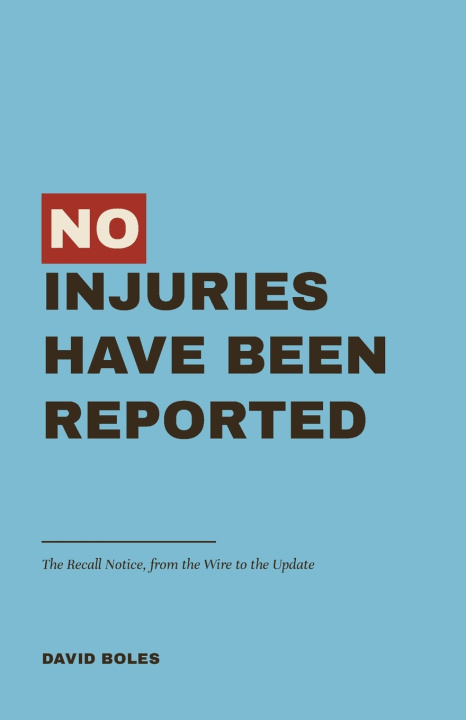
The sentence arrives by law, in the federally required typeface, on the envelope buried in your stack of mail: no injuries have been reported.
It counts what came in through the channel. What happened is a different count. The distance between the two is where this book lives.
No Injuries Have Been Reported reads the American recall as a drafted document across eighty-nine years of paper: the 1937 telegram from a drug maker that begged for its own poison back at the company's expense and never said why; the filing that priced a life at the government's own figure; the automaker that trained its engineers not to write the word defect; the drugstore retrieval disguised as ordinary shopping; the recalled crib that waited five years in a licensed nursery; the air bag still on the road after two decades of letters; the breathing machine on the nightstand; the software update that repairs a car before anyone is hurt.
Out of the documents come two laws. Law One: a seller's recall of its own defect is received as a confession, whatever it formally admits, so the stall lasts until someone other than the seller makes silence cost more than confession. Law Two: a recall protects only as far as it reduces exposure to the danger, and most of what Americans buy is never fixed at all.
The reading instrument is five questions, printed on a card at the back of the book. What does the notice say the danger is. What does it leave out. Who speaks, and in what words. What must you do, and what will it cost. What will count as fixed, and out of how many. They work on a telegram from 1937, on a federally reviewed owner letter, and on the next notice that arrives in your own mail.
For readers of law, business, and public policy; for drivers, parents, and patients; for anyone who has held the envelope and wondered what it was not saying.
Every fact rests on a source any reader can open: Senate documents, statutes, regulations, recall filings and owner letters, court opinions, hearing transcripts, and consent orders. Sources are named in the sentences that rely on them, conflicts print as conflicts, and live figures carry the dates they were read.


Информация за книгата
Английски език

Подарете тази книга днес
Лесно е
1 Добавете книгата в количката си и изберете Доставка като подарък 2 В замяна ще ви изпратим ваучер 3 Книгата ще пристигне на адреса на получателяЗдравейте! Аз съм Libroamiko, вашият книжен съветник.
Как мога да ви помогна?