
 Контакт
 Как се пазарува?
Доставка
Наръчник за пазаруване
 Английски език
 62 b
62 b
 Нови
Нови
До 30 дни за връщане на стоки

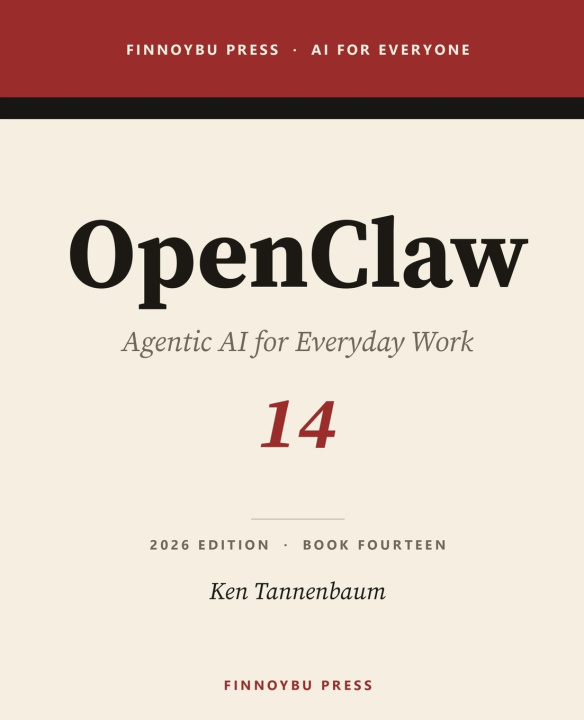
OpenClaw is the most-deployed agentic-AI framework in the world. This is the book that takes you from pip install openclaw to running a serious deployment.
Agentic AI moved from research demo to daily tool in 2025-2026, and OpenClaw - open-source, self-hosted, messaging-app-native - became the de facto framework for everyone who wanted real agents without surrendering to a vendor. Today it's used by individuals to automate their inbox, by engineers to wire it into terminals and IDEs, and by teams to run shared agents that touch real systems.
OpenClaw: Agentic AI for Everyday Work is the complete reference: how it works, how to set it up, how to use it day-to-day, and - critically - how to operate it without one of the documented failures from the Agents of Chaos study landing in your environment.
What's inside:
- First principles. What an "agent" actually is, why OpenClaw chose messaging apps over a dedicated UI, and the Agents of Chaos moment that shaped how the entire ecosystem now thinks about safety.
- Setup, end to end. Pick the right deployment shape, install OpenClaw, configure a model, wire your first channel (Slack, Discord, Gmail, iMessage, or your own), and have your first useful conversation.
- Daily rhythm. Memory, context, and sessions. The skills system. Writing your own skills. ClawHub and the community ecosystem of pre-built capabilities.
- The builder branch. When you need a plugin instead of a skill. Native plugins and the SDK. Bundle plugins and the compatibility layer. Packaging, distribution, and versioning.
- Channels and integrations. Messaging platforms in depth. Email and calendar (the productivity stack). Browser automation and the web. Developer integrations (GitHub, Linear, Sentry, databases, deploy platforms). Smart home, voice, and specialty channels.
- Security and operational discipline. The threat surface for agentic AI. The AGENTS.md policy engine. Sandbox modes. Identity, channels, and allowlists. The NemoClaw governance ecosystem and the third-party tools that grew up around OpenClaw after Agents of Chaos.
- The Agents of Chaos study, in depth. Why the paper changed everything. The eleven failure modes - what triggers each, how they manifest, what defends against them. What changed in OpenClaw after publication. The defensive posture for serious deployment.
- Multi-user and team operations. Beyond a single user. Multi-user deployment patterns. Operations, observability, and OTEL v2.
- Reference appendices. Configuration reference. Plugin SDK quick reference. AGENTS.md cookbook with copy-paste policies. The full Agents of Chaos failure-mode taxonomy as a quick-reference card. Glossary. Resources and further reading.
Whether you're a curious power user, a developer building on the framework, or a security or governance practitioner trying to deploy agents responsibly, this book covers the layer you need.
Includes the eleven Agents of Chaos failure modes mapped to defensive controls, full coverage of OpenClaw's AGENTS.md policy engine, and updated coverage of the post-paper ecosystem (NemoClaw, AxonFlow, MoltGuard, and the rest).


Информация за книгата
Английски език

Подарете тази книга днес
Лесно е
1 Добавете книгата в количката си и изберете Доставка като подарък 2 В замяна ще ви изпратим ваучер 3 Книгата ще пристигне на адреса на получателяЗдравейте! Аз съм Libroamiko, вашият книжен съветник.
Как мога да ви помогна?