
 Контакт
 Как се пазарува?
Доставка
Наръчник за пазаруване
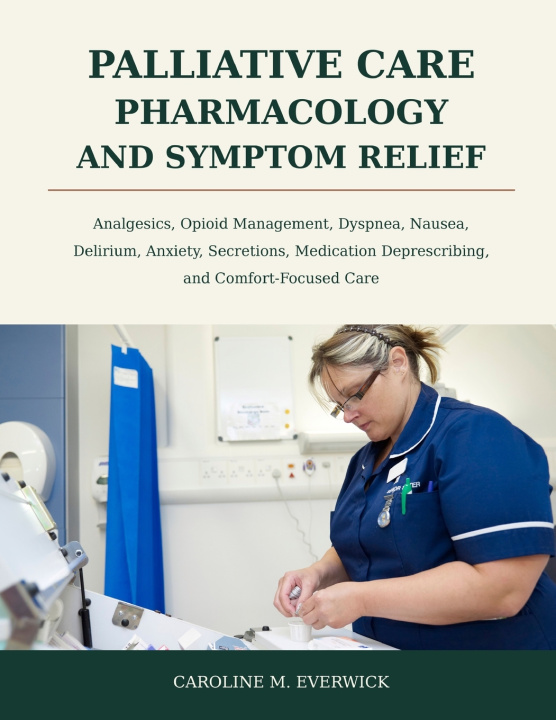
Palliative Care Pharmacology and Symptom Relief
Analgesics, Opioid Management, Dyspnea, Nausea, Delirium, Anxiety, Secretions, Medication Deprescribing, and Comfort-Focused Care
 Английски език
 548 b
548 b
 Нови
Нови
До 30 дни за връщане на стоки

Pain may be controlled on Monday and difficult to manage by Thursday. A patient who can swallow tablets today may need another route tomorrow. Renal function can change, delirium can appear, breathlessness can intensify, and a medication list that once made sense can become part of the burden.
Palliative Care Pharmacology and Symptom Relief is written for those turning points.
The book concentrates on medication decisions that recur throughout serious illness: choosing an analgesic, adjusting an opioid regimen, treating nausea or dyspnea, responding to delirium or anxiety, reducing troublesome secretions, and recognizing when a long-standing medication no longer contributes meaningful benefit.
Pain management is considered in the setting in which prescribing actually occurs-previous treatment, symptom severity, organ function, route of administration, breakthrough pain, adverse effects, toxicity, and inadequate response. Opioid therapy receives particular attention, including titration, rotation, conversion, monitoring, constipation, sedation, and the situations that should prompt reassessment rather than another automatic dose increase.
The same practical approach extends beyond pain. Dyspnea, nausea and vomiting, delirium, agitation, anxiety, and respiratory secretions can occur together, and one intervention may influence another symptom. The reader is guided toward identifying the dominant problem, considering reversible contributors, choosing a reasonable medication strategy, and reviewing whether treatment has actually improved comfort.
Deprescribing has its own place in the discussion. As illness advances, preventive drugs, supplements, and long-term therapies may no longer provide the same value. Decisions to continue or withdraw them should take account of prognosis, treatment burden, withdrawal risk, patient priorities, and the purpose the medication still serves.
The full-color interior makes drug comparisons, symptom pathways, treatment considerations, and clinical teaching material easier to navigate during study and review.
This is not simply a list of medicines used in palliative care. It is a prescribing reference built around the more difficult question: why this medicine, for this symptom, in this patient, at this point in the illness?
Add Palliative Care Pharmacology and Symptom Relief to your clinical library and keep a focused, full-color reference close when comfort depends on choosing the right medicine, the right route, and the right moment to change course.


Информация за книгата
Английски език

Подарете тази книга днес
Лесно е
1 Добавете книгата в количката си и изберете Доставка като подарък 2 В замяна ще ви изпратим ваучер 3 Книгата ще пристигне на адреса на получателяЗдравейте! Аз съм Libroamiko, вашият книжен съветник.
Как мога да ви помогна?