
 Контакт
 Как се пазарува?
Доставка
Наръчник за пазаруване
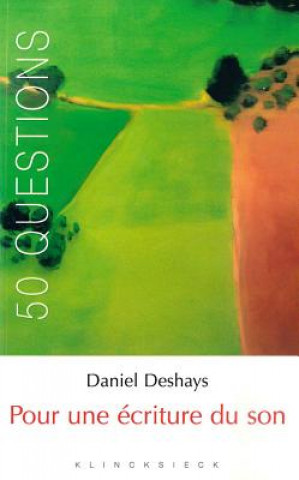
Pour Une Ecriture Du Son
 Френски език
 68 b
68 b
До 30 дни за връщане на стоки
Клиентите са закупили също







Recording professionals think that they are faithfully transcribing reality. However, classical music cannot be recorded in the same way as rock, and the soundtrack of a film is very different from that of a stage play. In fact, sound is far from having achieved its autonomy — it even lacks the advantage of photography, in which a snapshot can be interpreted as either a reporting or an artistic medium. Sounds recorded within the framework of a news report cannot be exhibited in art galleries even though, like photography, they are a « window » on the world !This book examines the reasons for such a situation. As a « book manifesto », it suggests new sound-recording applications : mixing writing combinations and inventing « mixed techniques » are but a few of the methods needed to foster less restricted sound-recording practices. Why shouldn't a sound recording dare to follow new rules, take full advantage of movement, of a change in the observer's position and of the ellipse, as motion pictures have taught us ? The aesthetic reflection emanating from it originates from the field. These are not presumptive theories — they are all derived from the author's various own productions : films, dance performances and, most pertinently, stage performances.Daniel Deshays heads the sound training programme at the École nationale supérieure des arts et techniques du théâtre (ENSATT) ; he also founded the sound training programme at the École nationale supérieure des beaux-arts (ENSBa).


Информация за книгата
Френски език

Подарете тази книга днес
Лесно е
1 Добавете книгата в количката си и изберете Доставка като подарък 2 В замяна ще ви изпратим ваучер 3 Книгата ще пристигне на адреса на получателяЗдравейте! Аз съм Libroamiko, вашият книжен съветник.
Как мога да ви помогна?