
 Контакт
 Как се пазарува?
Доставка
Наръчник за пазаруване
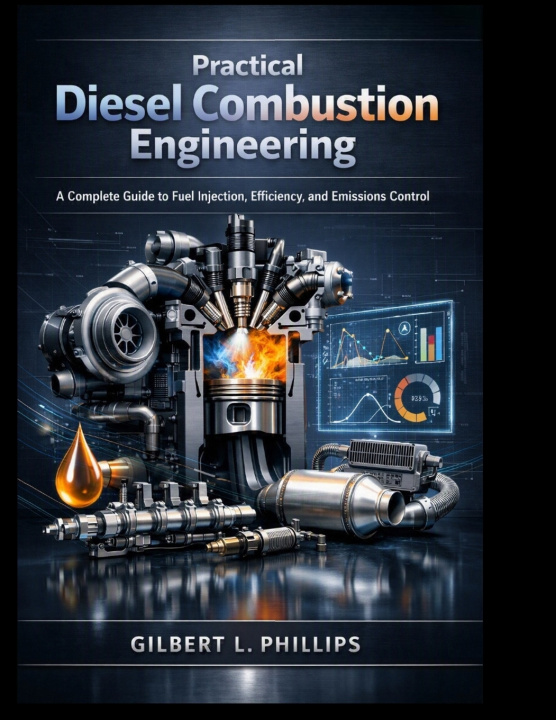
Practical Diesel Combustion Engineering
A Complete Guide to Fuel Injection, Efficiency, and Emissions Control
 Английски език
 38 b
38 b
 Подготвяме
 Нови
Нови
До 30 дни за връщане на стоки

Have you ever stared at a fuel injector and wondered what's actually happening inside it at 2,000 bar? Have you sat through a combustion calibration meeting and felt like everyone else in the room understood the trade-offs except you? If either of those sounds familiar, this book was written with you in mind.
Diesel combustion engineering isn't a subject you can learn from scattered forum posts and outdated textbooks. It's a discipline that blends thermodynamics, fuel chemistry, mechanical design, electronic control strategy, and emissions science into a single, constantly evolving field - and most resources out there only give you one slice of that picture. This book gives you all of it, in one place, written the way a mentor would actually explain it to you: clearly, honestly, and without unnecessary jargon standing between you and real understanding.
So what will you actually walk away with?
You'll understand exactly why a diesel engine ignites fuel without a spark, and why that single fact shapes everything else about how these engines are designed. You'll learn how fuel injection systems evolved from purely mechanical pumps into today's precisely controlled electronic architecture, and why that evolution mattered so much for performance and emissions. You'll get a genuinely practical breakdown of how injection timing, multiple injection strategies, and electronic calibration actually work together - not just definitions, but the real reasoning behind the trade-offs engineers wrestle with every day.
Curious about turbocharging and air management? You'll find a clear, thorough explanation of how these systems are sized, matched, and controlled. Want to understand why modern diesel engines need particulate filters and selective catalytic reduction systems, and how those systems actually function? That's covered in detail too, along with how all these components are integrated into one coherent, working system.
This book doesn't stop at theory.
You'll also find a genuinely useful troubleshooting and diagnostics section - the kind of practical, field-tested guidance that helps you actually diagnose combustion-related problems instead of guessing and replacing parts one at a time. Real case studies walk you through how experienced engineers actually think through a diagnostic problem, step by step, from symptom to root cause.
Wondering if this book is too advanced for you, or not advanced enough?
If you're a student trying to build a genuine foundation in combustion engineering, this book gives you the depth you need without losing you in unnecessary complexity. If you're already working in the field - as a technician, an engineer, or someone supporting fleet operations - you'll find detailed, applicable material on calibration strategy, emissions compliance, computational modeling, and where this entire field is heading as fuel technology and hybrid systems continue to evolve. And if you're simply fascinated by how these engines work, you'll find this written in a way that respects your intelligence without assuming you already have an engineering degree.
Why does this book cover so much ground?
Because diesel combustion engineering isn't really twenty separate subjects - it's one interconnected system, and understanding it properly means seeing how fuel chemistry affects injector wear, how injection timing affects emissions, and how emissions regulations shape the calibration decisions engineers make every single day. This book was structured specifically to help you see those connections, not just memorize isolated facts.
Are you ready to actually understand this subject, instead of just skimming the surface of it?


Информация за книгата
Английски език
