Над 10 милиона заглавия на английски и други езици! Открийте новата си история още днес! Безплатна доставка за поръчки над 69.99€

Станете част от общност от любители на книгите от цял свят и получавате много предимства.
Създай на безплатен акаунт
Безплатна доставка със Еконт над 69.99 €
Куриер Speedy 3.99 €
Пункт на Speedy 3.99 €
ЕКОНТ 4.49 €
Еконтомат/Офис на Еконт 4.49 €
Ekont Box 4.49 €
Sameday 4.49 €
Sameday box 4.49 €
Box Now 4.49 €
 Контакт
 Как се пазарува?

Помощ
Доставка
Куриер Speedy 3.99 €
Пункт на Speedy 3.99 €
ЕКОНТ 4.49 €
Еконтомат/Офис на Еконт 4.49 €
Ekont Box 4.49 €
Sameday 4.49 €
Sameday box 4.49 €
Box Now 4.49 €
Безплатна доставка със Еконт над 69.99 €
Наръчник за пазаруване
Моят акаунт
▸
Празна :-(
0
Над 10 милиона заглавия на английски и други езици! Открийте новата си история още днес! Безплатна доставка за поръчки над 69.99€
The Bug-In Decision
A Civilian's System for Sheltering, Sustaining, and Defending Your Home
Език
 Английски език
Книга
С меки корици
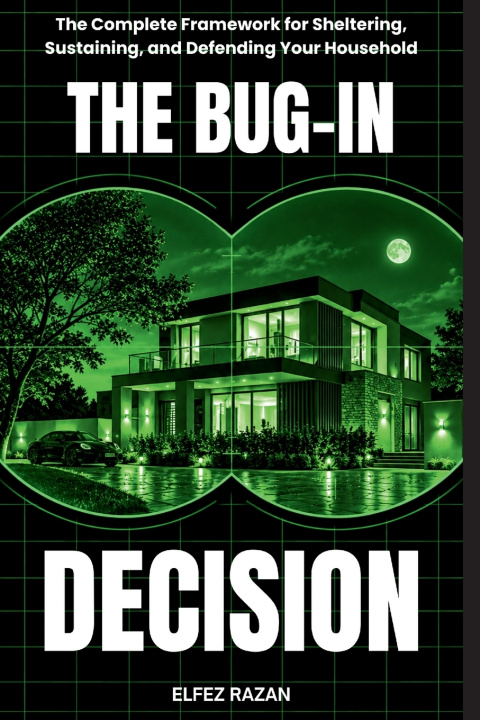
Most preparedness books give you a shopping list. This one gives you a system.You have read the guid...
Цялото описание
Код Либристо: 54472588
?
 182 b
 Нови
182 b
Нови
74.74
€
146.17
лв
Външен склад
Изпращаме след 9-13 дни
До 30 дни за връщане на стоки

Most preparedness books give you a shopping list. This one gives you a system.
You have read the guides. You have bought the gear. You have a closet full of flashlights, a case of bottled water, and a nagging feeling that none of it would actually work when it mattered. You are right to feel that way.
Tactical manuals written for operators assume you will be defending a compound. Doom-and-gloom books assume the grid never comes back. Recipe-heavy survival guides assume the crisis is a camping trip. None of them account for the reality most families actually face: a parent with a medical condition, a child who panics in the dark, a rental lease that forbids drilling into the doorframe, a budget that does not stretch to a bunker.
The Bug-in Decision is written for that family. It treats preparedness as an integrated operating system - seven interlocking systems, one decision framework, and a set of drills that turn equipment into competence.
Inside, you will build:
A 72-hour household audit and a scored Capability Scorecard that identifies your weakest link before you spend a dollar
A water system with storage, procurement, and a three-method purification redundancy - plus the legal limits of rainwater harvesting by state
A food system built on calories and rotation, not recipes - with a 30-day rotation plan and a special-needs matrix for infants, the elderly, and medical diets
A tiered energy plan from portable solar to generators to whole-home backup, with the carbon monoxide, backfeed, and fire-safety rules most guides gloss over
A sanitation and austere medicine protocol - off-grid toilets, waste management, handwashing without running water, and an evacuation decision framework for when help is not coming
A layered security system - deter, detect, delay, defend - with a safe room you can build for under $300
A communications plan with an out-of-area contact, rally points, and encrypted pod-level comms
A resilience pod of three to eight neighboring households who share skills, resources, and mutual aid before a crisis
And you will practice:
Five ready-to-run drills with objectives, checklists, debrief guides, and lessons-learned prompts: the Blackout Weekend, the Water Outage Day, the No-Contact 24 Hours, the Perimeter Check, and the Evacuation Decision Drill.
Plus a 30-Day Implementation Roadmap that takes you from interested to prepared in one month - with budget trackers for three spending tiers and a minimum viable household checklist for under $200.
Who this is for: Families, homeowners, and renters who want a realistic, sustainable plan for sheltering in place - and the judgment to know when to leave. Readers who are motivated but overwhelmed by gear-obsessed, doom-heavy preparedness culture.
Who it is not for: Readers looking for a gear catalog, a tactical fantasy, or a one-scenario plan that never gets revised. This book will tell you what to buy only after it tells you what to test.
Preparedness is not a purchase. It is a practice. This book is the practice manual.
Героиня
&
Полиглот
EWA KASP
за
Пусни видеото


В Libristo има най-богатия избор от чуждоезична литература. Затова купувам книгите си тук.
Информация за книгата
Пълно заглавие
The Bug-In Decision
Автор
Elfez razan, Elfez razan
Език
Английски език
Английски език
Корици
Книга - С меки корици
Дата на издаване
2026
Брой страници
412
Баркод
9798140847074
Код Либристо
54472588
Издателство
Independently published
Тегло
763
Размери
152 x 229 x 27

Подарете тази книга днес
Лесно е
1 Добавете книгата в количката си и изберете Доставка като подарък 2 В замяна ще ви изпратим ваучер 3 Книгата ще пристигне на адреса на получателя
Книжен съветник Libroamiko
Използвайки този чат, вие комуникирате с генеративен изкуствен интелект. Използвайки го, вие също се съгласявате с обработката на лични данни.
Здравейте! Аз съм Libroamiko, вашият книжен съветник.
Как мога да ви помогна?
Здравейте, аз съм Libroamiko, мога ли да помогна?