Контакт
 Как се пазарува?
Доставка
Наръчник за пазаруване
 Английски език
 59 b
59 b
 Нови
Нови
До 30 дни за връщане на стоки
Клиентите са закупили също






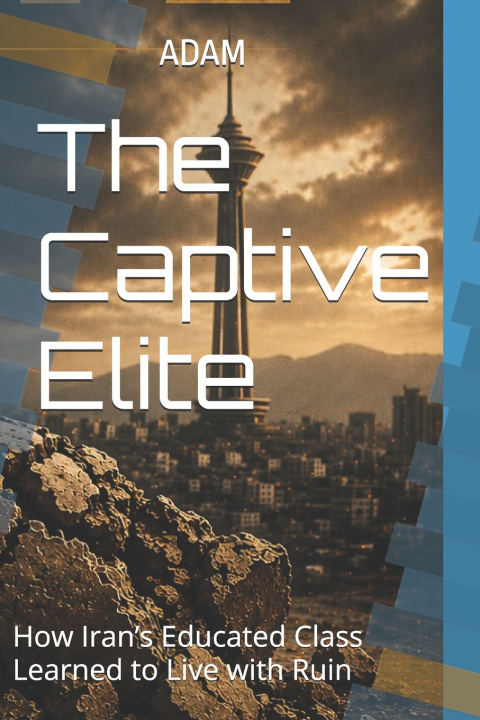
In January 2026, Iran's government killed thousands of its own citizens in the deadliest crackdown in the Islamic Republic's history. The Captive Elite was substantially finished before that week. It is being read after it - and its central question has never been more urgent.
Why did so many of Iran's most educated people - inside the country and across its diaspora - learn to live beside a system they knew was destroying their country, rather than treating it as something no serious person could accept?
Under the pen name ADAM, this book argues that authoritarian endurance cannot be explained by repression alone. It must be understood through the conduct of those best positioned to name that destruction, resist it, and refuse to make it survivable - and who, too often, did not.
Drawing on political theory, social psychology, and comparative history - from Hannah Arendt's account of bureaucratic evil to Václav Havel's writing on life inside a lie, and how educated classes are formed and taught to reproduce themselves - The Captive Elite traces how:
- abnormal conditions become normalized, one adaptation at a time
- intelligence is turned toward softening reality instead of clarifying it
- institutions reward calibration and quietly punish conviction
- nuance and complexity become sophisticated forms of moral evasion
- repeated atrocity fails, again and again, to produce lasting judgment
The book's argument is anchored in an unlikely place: Lyon, France, where the authors traced the last steps of Jean Moulin, the Resistance leader tortured to death for refusing to talk - and visited the grave of Mohammad Moradi, an Iranian student who ended his life on the Rhône in 2022 to make the world look at his country. The book is dedicated to them, alongside Jina Mahsa Amini, Neda Agha-Soltan, and Václav Havel.
This is not a polemic. It is a diagnosis - and, in its final chapters, a demanding blueprint for the intellectual seriousness required to keep this failure from repeating.
While grounded in Iran, The Captive Elite is ultimately a study of elite behavior under pressure everywhere. It asks a question no educated class can safely assume applies only to someone else's country:
How do educated people become the stabilizers of their own country's ruin?


Информация за книгата
Английски език
Категории

Подарете тази книга днес
Лесно е
1 Добавете книгата в количката си и изберете Доставка като подарък 2 В замяна ще ви изпратим ваучер 3 Книгата ще пристигне на адреса на получателяМоже би ще Ви заинтересува






 /
/
 С меки корици
 19.65
€
38.43 лв
19.65
€
38.43 лв



 /
/
 Игра
26.17
€
51.18 лв
Игра
26.17
€
51.18 лв