
 Контакт
 Как се пазарува?
Доставка
Наръчник за пазаруване
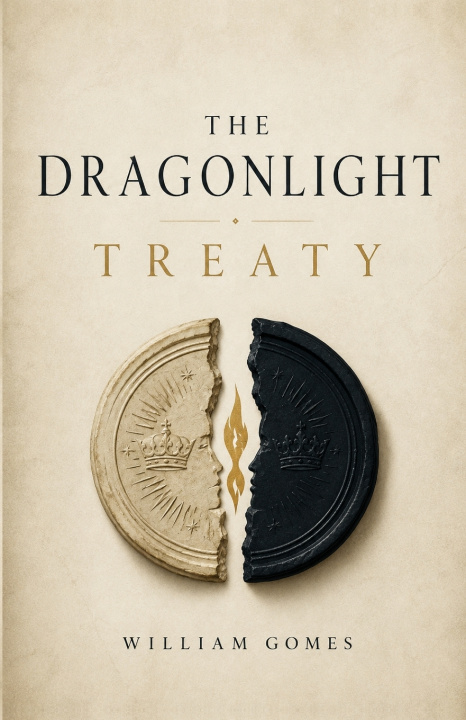
The Dragonlight Treaty
 Английски език
 36 b
36 b
 Подготвяме
 Нови
Нови
До 30 дни за връщане на стоки

Two kingdoms have come to negotiate a treaty. Beneath the hall where they bargain, an ancient dragon is dying.
Auremni has been without a ruler for eleven months. Its succession depends upon a bond no hatchling has yet made, while the old guardian beneath the palace is failing. Sera Maer, eligible heir to a rule she cannot yet claim, must help protect a realm whose powerful neighbour questions the legitimacy of the very system by which Auremni governs itself.
Then Cael Thalen arrives from Velantis.
A careful, experienced diplomat, Cael comes from a kingdom with a profoundly different understanding of political authority. He also carries the legacy of an earlier accord whose lawful provisions cost his family their ancestral aerie and left damage that endured long after the treaty itself was celebrated. He has good reason to read Auremni's documents closely, and little reason to trust the beauty of a carefully drafted clause.
When a dragon egg dies in circumstances the keeper cannot explain, the negotiations become something more dangerous.
Sera and Cael begin uncovering irregularities in the hatchery records: eggs transferred into reserve custody whose records simply stop, procedures that can be entirely proper and still conceal what happened, and evidence that forces them to look beyond the hatchery itself. The deeper they go, the harder it becomes to separate protection from control, evidence from interpretation, and lawful procedure from the uses to which powerful people can put it.
Every safeguard can become leverage. A truthful record can still create a false conclusion.
And as Sera and Cael begin to trust one another in ways neither can safely treat as simple, their growing intimacy becomes inseparable from questions of political power, consent and freedom.
With the guardian failing and the treaty moving towards its decisive hour, both must confront not only what has been hidden, but the systems that made hiding possible. What would shared rule mean if neither kingdom were allowed simply to possess the life and power on which their politics depend?
The Dragonlight Treaty is a literary political fantasy about sovereignty, consent, institutional memory, inherited harm, accountability and the difficult difference between protecting something and owning it.
For readers drawn to intelligent, character-driven fantasy where diplomacy can be as consequential as battle, intimacy depends upon restraint, and the most dangerous thing in the room may be a perfectly lawful document.


Информация за книгата
Английски език
