
 Контакт
 Как се пазарува?
Доставка
Наръчник за пазаруване
 Английски език
 36 b
36 b
 Нови
Нови
До 30 дни за връщане на стоки

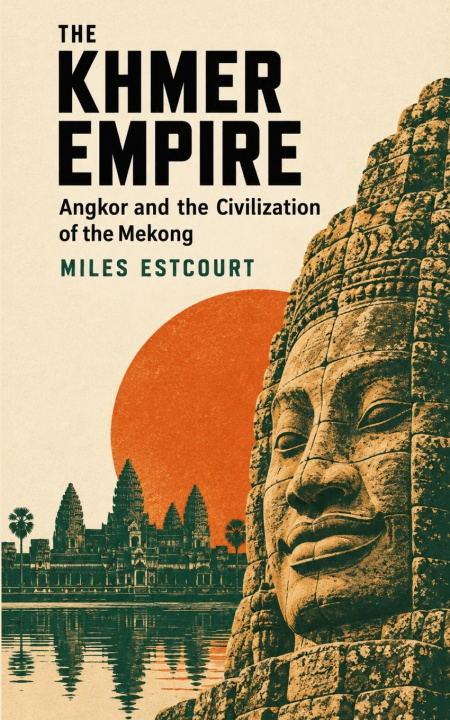
The Khmer Empire held mainland Southeast Asia together for more than six centuries, from the founding of a unified kingdom in 802 to the day the court left Angkor in the fifteenth century. Its kings raised temples on a scale unmatched before the modern era, but those monuments were only one expression of a state that assessed land, assigned labor, moved water, collected rice, and recorded its obligations on stone. This book treats that state as the subject, following the Khmer story from the earlier kingdoms of the Mekong through the founding on Phnom Kulen, the making of the capital and its water system, the reign that produced Angkor Wat, the crisis of the Cham wars, and the vast building program of Jayavarman VII, to the long reordering that ended Angkor's career as a royal center.
It also separates the evidence from the romanticized discovery myth. Angkor was never lost. Monks, farmers, and pilgrims stayed, visitors from Asia and Europe described the temples centuries before Henri Mouhot reached them in 1860, and the image of a vanished civilization rescued by outsiders was a colonial construction, not a discovery. Drawing on Khmer inscriptions in Sanskrit and Old Khmer, Chinese records, temple inventories, archaeology, and the LiDAR survey of 2012, the book reads each source for what it can and cannot show.
The result is a clear and honest account of how a complex agrarian state worked, how it lasted so long, and why its history rewards more attention than the legend built over it.


Информация за книгата
Английски език

Подарете тази книга днес
Лесно е
1 Добавете книгата в количката си и изберете Доставка като подарък 2 В замяна ще ви изпратим ваучер 3 Книгата ще пристигне на адреса на получателяЗдравейте! Аз съм Libroamiko, вашият книжен съветник.
Как мога да ви помогна?