
 Контакт
 Как се пазарува?
Доставка
Наръчник за пазаруване
 Английски език
 43 b
43 b
 Нови
Нови
До 30 дни за връщане на стоки

When does silence become permission?
American government is built around institutions designed to disagree. Congress investigates. Courts review. Lawyers advise. Inspectors general audit. Professional officials raise risks. Whistleblower laws create protected channels. Citizens vote, petition, organize, and object. Yet none of those mechanisms acts by itself.
Silence can be responsible. A prosecutor may refuse public comment to protect an investigation. A military officer may argue privately and then execute a lawful order. Intelligence professionals may be legally barred from public disclosure. Officials may wait because evidence is incomplete. Citizens may reasonably choose work, family, and private life over permanent political engagement.
But silence can also become politically consequential. Career risk can discourage candor. Party loyalty can soften oversight. Secrecy can outlive its purpose. Committees can diffuse responsibility. Institutions can learn to protect their reputations rather than correct their failures. Citizens can become so exhausted by permanent political alarm that serious abuses face less resistance than ordinary disputes once did.
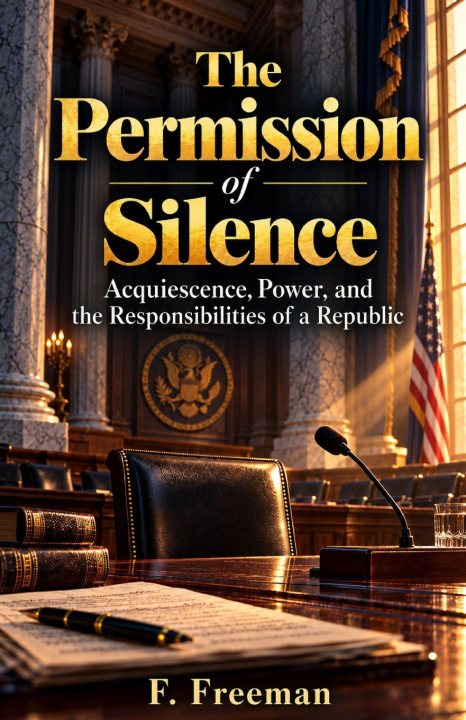
In The Permission of Silence, F. Freeman develops a disciplined framework for telling those conditions apart. Drawing on American constitutional history and institutional case studies, the book asks:
- When does non-objection become acquiescence?
- Who actually has a duty to speak, investigate, report, refuse, or act?
- How do hierarchy, secrecy, loyalty, fear, and career incentives shape what institutions hear?
- Why can formal whistleblower and oversight channels exist while employees still remain silent?
- When does loyalty to a party, leader, profession, or institution suppress independent judgment?
- How should citizens understand their own responsibility without treating politics as a full-time occupation?
- What distinguishes healthy restraint from a system that has learned to treat silence as permission?
The Permission of Silence is ultimately a book about constitutional behavior. Rules matter. So do the people who must decide whether to activate them.


Информация за книгата
Английски език
Категории

Подарете тази книга днес
Лесно е
1 Добавете книгата в количката си и изберете Доставка като подарък 2 В замяна ще ви изпратим ваучер 3 Книгата ще пристигне на адреса на получателяЗдравейте! Аз съм Libroamiko, вашият книжен съветник.
Как мога да ви помогна?